

Safety
Safety comes first at every Canadian airport.
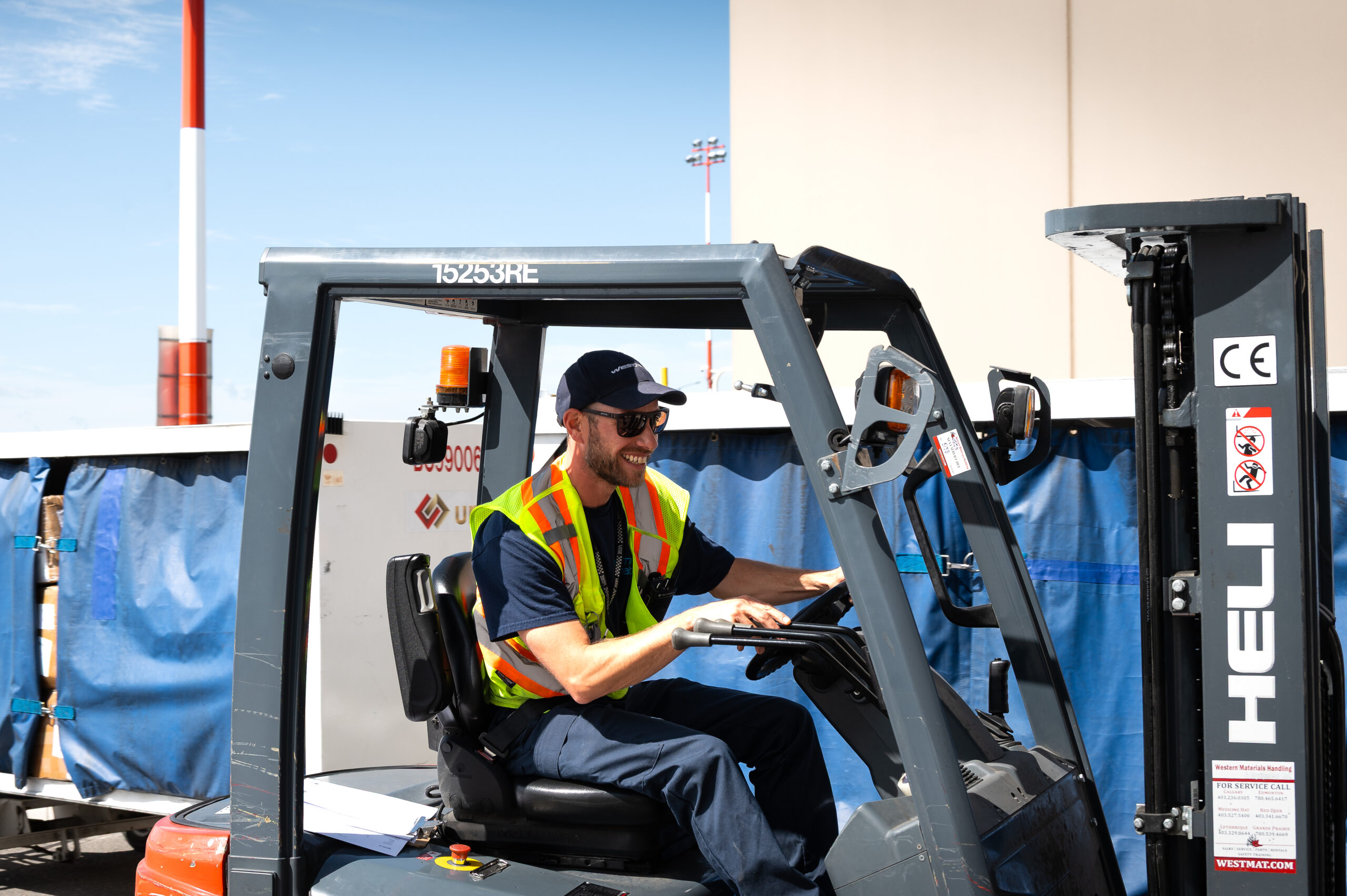
Every day, thousands of trained workers help passengers, air crews and airport employees travel and do their jobs safely.
Most of this work happens out of view. Before a flight leaves its gate, airport operations crews, firefighters, security screeners, border officers, air traffic controllers and airline staff have each played a role in getting it there safely and being ready for any situation.
Who runs airport security and Canada’s borders?
Security screening is carried out by the Canadian Air Transport Security Authority (CATSA), a federal agency. It is funded through the Air Travellers Security Charge, which passengers pay on their tickets to the Government of Canada. (This is not considered an airport fee.) Nearly 9,000 screening officers staff CATSA checkpoints at 89 airports across the country.
For travellers arriving from abroad, the Canada Border Services Agency handles immigration and customs. The CBSA is a federal agency, funded by tax dollars provided for in the federal budget.
Airports provide the space and infrastructure used by these agencies at the airport.
Does security apply to airport workers?
Workers requiring access to restricted areas use secure identification systems that can include biometric verification such as iris and fingerprint checks.
At the highest-risk airports, workers and their belongings — vehicles included — are also randomly screened on the way in.

Who runs Canadian air traffic control?
NAV CANADA runs Canada’s civil air navigation system, or ANS. It is independent of government, and by law its charges cannot exceed what the service costs to run. The costs of running the ANS are fully recovered from fees charged to aircraft as they fly through Canadian airspace.
NAV CANADA’s 5,000 employees staff air traffic control towers at 42 airports and flight service stations at 55 more, guiding aircraft across 18 million square kilometres of Canadian air space.
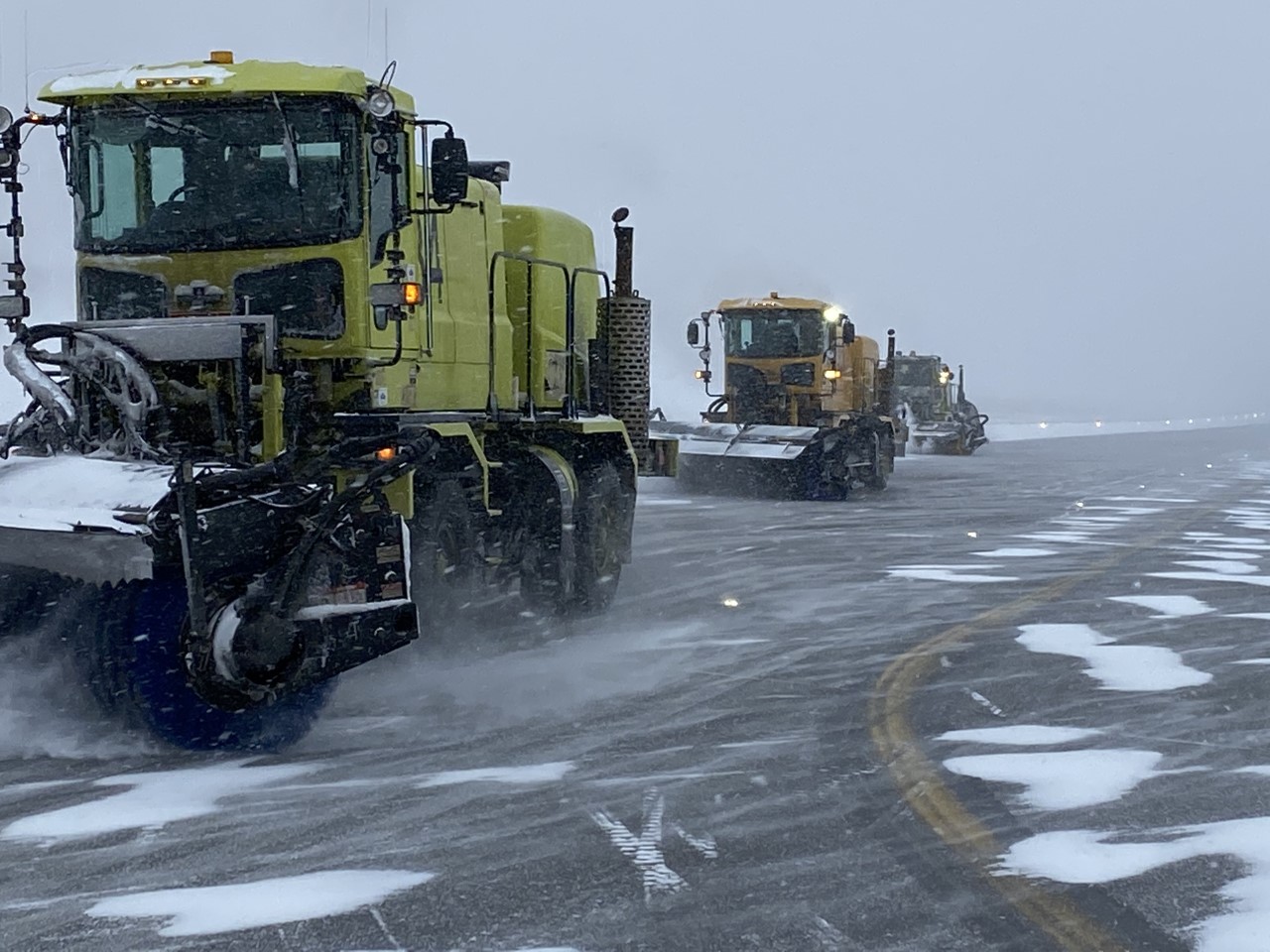
Snow, ice and freezing fog are a year-round planning job — and a cost most airports in the world never carry.
How do Canadian airports manage winter safety?
Winter is one of the biggest jobs a Canadian airport has, and one most travellers never think about. Airports plan for it all year, with specialised crews and equipment ready from late fall through to spring — the Winter section sets out how it is done.
How airports prepare for emergencies
Many airports station their own aircraft rescue and firefighting services directly on the airfield.
Transport Canada requires every airport to run a full-scale emergency exercise every two years. At Regina’s exercise in September 2024, more than 150 people rehearsed the response to an aircraft accident. City fire and police services, the Canada Border Services Agency, NAV CANADA and others worked the scenario together.
How airports manage wildlife
Birds and aircraft do not mix and moving them along sustainably with noise or animal helpers is a daily job. For example, Winnipeg works with a trained English Setter and a hawk to keep geese, gulls and other birds away from the airfield.
When a community — or a country — needs its airport
During the 2016 wildfire, Fort McMurray’s airport played a critical role in evacuating the region. Its runway stayed open throughout the May 2024 wildfires so firefighting aircraft could keep working. And when Iqaluit suffered a complete water system failure in 2022, planeloads of potable water and emergency equipment arrived to relieve residents’ most urgent needs for clean drinking water. Canadians always come together, and the airport is the fastest way for us to reach our neighbours in a time of need.
For many westbound transatlantic flights, Newfoundland is the first point of land in North America. The St. John’s airport took in 39 diverted flights in 2024 — every one of them needing some level of support on the ground, usually at short notice.
Furthermore, several Canadian airports are co-located with Canadian Forces, and others are strategically located to serve and support hundreds of domestic and allied military and government flights to land and refuel during operations and transits, without fees charged to use the infrastructure.
How airports keep workers safe
Safety includes the people who keep the airport running.
- Gander’s airport reported 2,242 days without a lost-time accident at the end of 2024.
- Winnipeg and Saskatoon have trained their staff to safely recognise and report human trafficking, through the Not in My City program.
- Edmonton is home to the RCMP’s national police dog training centre, which brought together 42 dog and handler teams from across North America in 2025.