

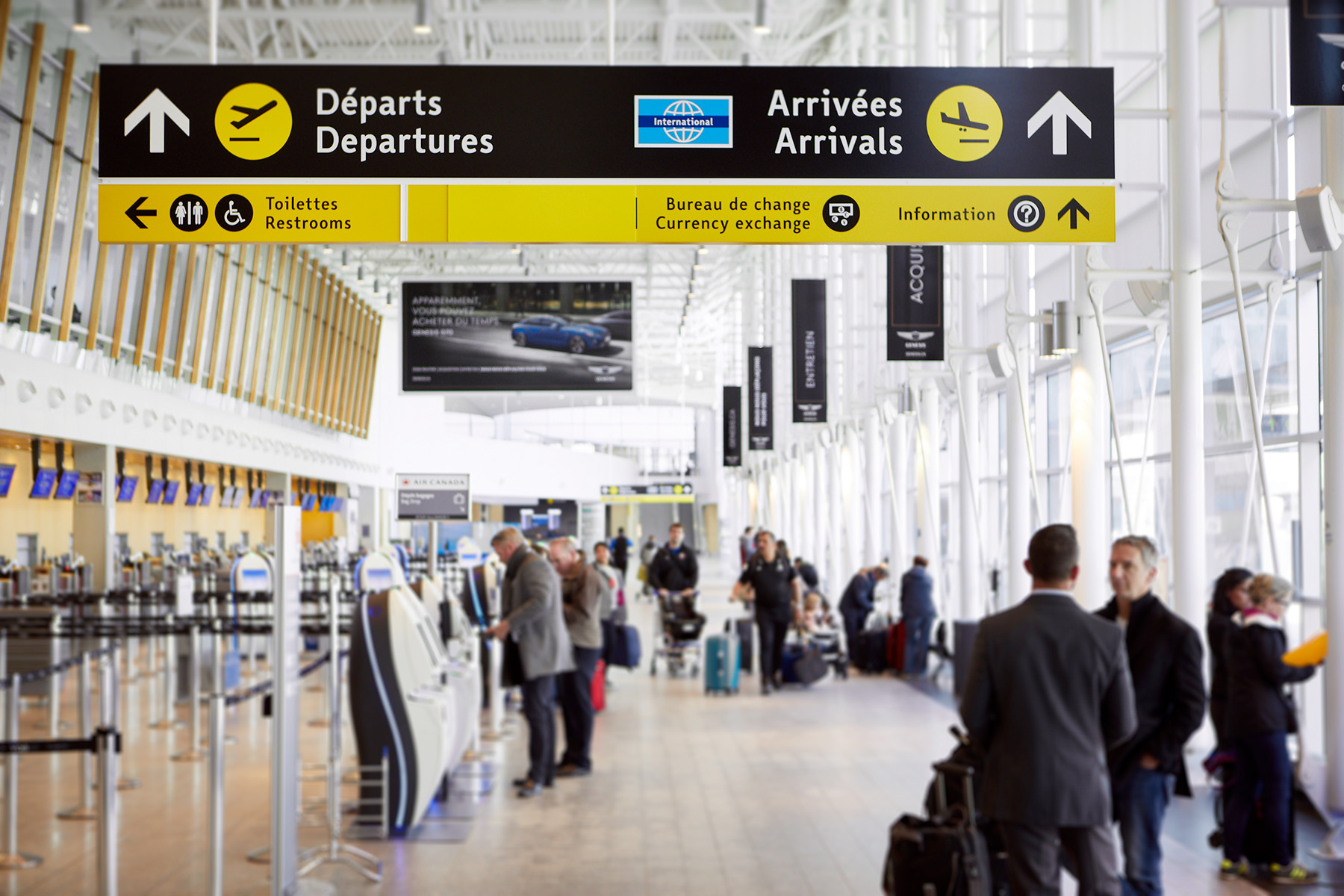
Affordability
Wherever they live, Canadians need access to reliable, affordable air transportation — and the opportunities that come with it.
How your airfare breaks down
Air travel requires many service providers to serve one customer. According to leading independent analysts Intervistas, here is what gets paid out of your airfare, and what those players use it to fund:
- Your chosen airline. In Canada, most of your ticket cost is tied directly to airline costs and fares, about 70 per cent of an average ticket. The share varies between domestic and international travel fares. Airlines are for-profit companies, and choose which routes and destinations to serve, which aircraft, and what times to fly. Air ticket business models have moved beyond the traditional standard base fare to charging for seat, baggage and other service or surcharge fees, plus leveraging robust loyalty programs and credit-card partnerships.
- The airports you use. Landing and terminal fees (also known as aeronautical fees) are paid directly by the airline, per flight, and are usually about 5 per cent of a ticket. In addition, Airport Improvement Fees (AIF) directly support the cost of investments in airport infrastructure. AIF varies by airport depending on local needs, but a portion of it also goes towards federal rent payments and sales tax is collected on top. Counting all this together, airport costs reflect about 12 per cent of the average airfare. Airport AIF setting decisions are transparent and undergo consultation and approval by each airport’s airline stakeholders. Airports also use income from on-site businesses and services to support the airport’s budget, with all proceeds from both sources being reinvested back into the airport.
- Security screening. The Canadian Air Transport Security Authority (CATSA) is a federal Crown corporation that provides security screening of passengers and cargo before flight, and that buys and deploys the screening technologies used in airports across Canada. Passengers pay the Air Travellers Security Charge on their ticket, with revenues going directly to the federal government to fund CATSA through annual budget decisions – and not always recycling the full amount collected.
- Air traffic control. NAV CANADA is a unique non-share corporation, empowered by the government to provide air traffic navigation services (ATNS). They recover 100 per cent of their costs through charges paid by airlines, based on their use of Canadian airspace. These fees do not show up on your ticket but are always a share of its cost.
As a fully user-pay system in Canada, these fees and costs travellers bear can be higher than they are in the United States, for example, because our taxpayers do not directly subsidise airport and aviation infrastructure and services the way the U.S. and many other nations do. Canadian airports actually pay federal and local governments hundreds of millions of dollars each year for use in their general revenues.

How the airport authority uses its share
Canada’s airport authorities are private, non-share-capital corporations (non-profit). There are no shareholders – no dividends or profits are extracted – and they are accountable to boards that are drawn from local, provincial and federal appointments.
The airports are run as businesses with no taxpayer funding. Every dollar possible is reinvested in operating the airport and building what it needs.
More than $30 billion has gone into improving, modernising and growing Canadian airports this way — funded by the people who use them and leveraging low-cost, long-term debt and bond markets using strong credit ratings to secure some of the lowest rates in the market.
The true cost of ground rent
Airports operating on federally leased land have been paying rent to the Government of Canada since the 1990s. In 2025 alone, those payments totalled $556 million to the federal budget.
Unlike other taxes, federal airport rent is charged on all of an airport’s income – including the non-aeronautical revenue meant to offset airport fees and make travel more affordable. Up to 12 cents of every dollar an airport earns from business activities such as retail, parking and land leasing goes to the federal treasury first.
What moves ticket prices? Competition
The single biggest lever airports have for driving down air fares isn’t actually their fees, but the competition they enable. Head-to-head competition on a given route has been proven to drive down fares.
Canada’s air sector is already competitive, with more competition now than there has been in a decade. But more would be better.
How airport capacity stimulates competition
Airport authorities can’t fly planes or set flight fares. What they can do is build facilities and capacity that serve local and international demand and attract more airline competition: more gates (and more of the right gates), more terminal space to house passengers and services, and the right infrastructure for turning aircraft around quickly to save everyone time and money. This is especially important at busy, slot-constrained hubs like Toronto Pearson that are butting up against capacity. A full airport is a sign of an attractive airport – but also of an airport that needs to add capacity and scale to meet that growth.
Travellers are asking for more direct flights and a wider range of destinations and services. Canada’s airports build to support a diverse and competitive airline market where growth connects passengers, carries trade and supports local businesses.
How airport improvements take cost out of the system
Modernised terminals help airlines turn aircraft around faster and they serve more travellers for every dollar they cost to operate. This is why the best metric for airport cost comparisons is cost per enplanement, or CPE — the full cost of moving a passenger through an airport is what determines whether the system is efficient for airlines and travellers. On this all-in measure, Canadian airports are very competitive.
Airports have been innovating to take cost out of the system and improve passenger experience for years, mostly in ways a traveller never sees. Flexible check-in and boarding gate systems save airline agent time and boarding congestion, and aircraft HVAC and power services installed at gates let an aircraft shut down its engines while parked, saving fuel cost and emissions. Many airports now deploy automated equipment and a suite of modern sensors throughout the airport that track and flag issues with equipment or personnel in real time, and allow for more efficient and timely ground operations to reduce costs and delays.
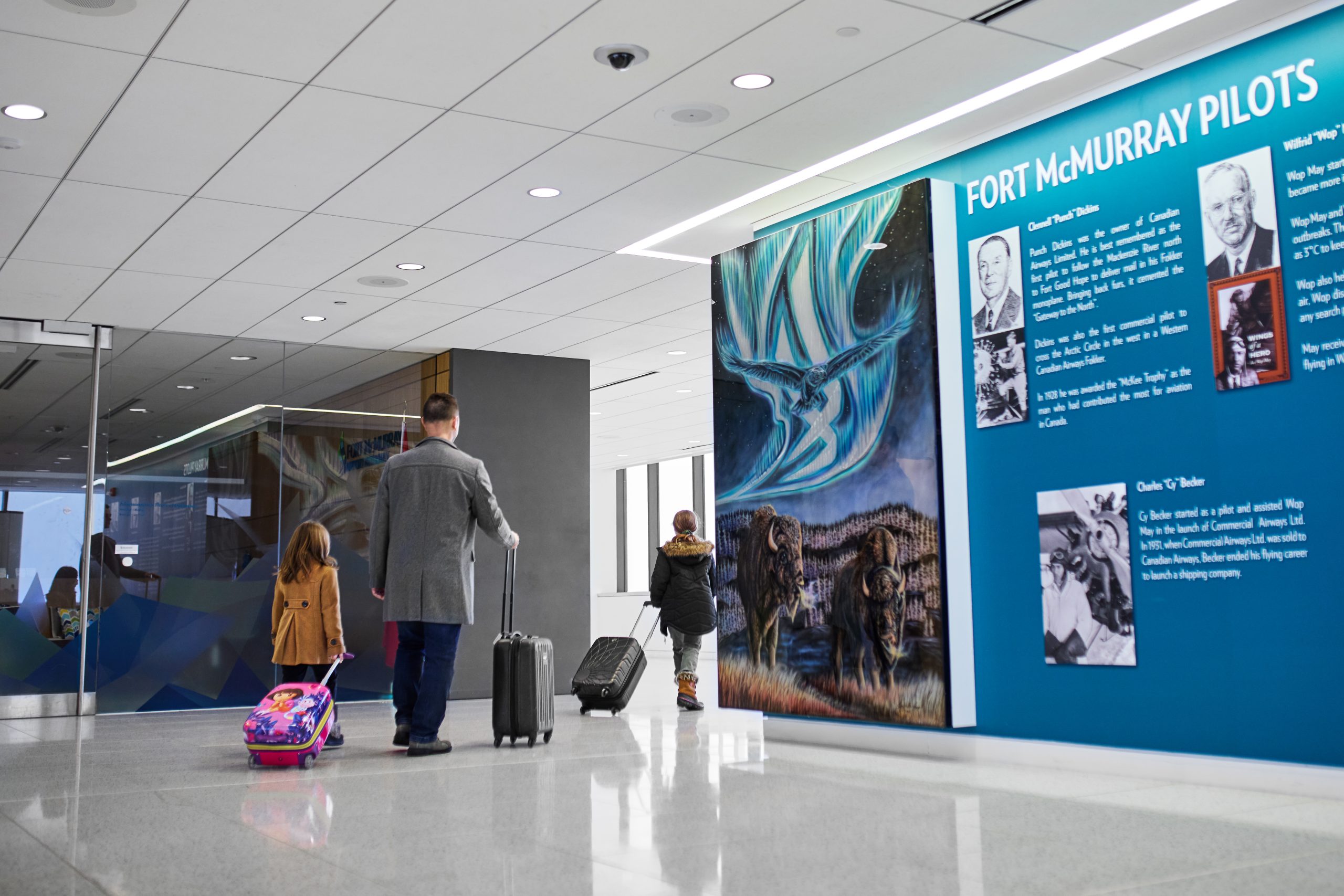
What gets built today has to work for travellers 20 years from now.
Demand at Canadian airports is projected to double in the next 20 years. Air travel is growing, and in new ways. Policy reforms already on the table would advance shovel-ready airport projects while making Canadian airlines more competitive and helping Canada become more attractive to visit and transit through.
Airports build in cycles measured in decades, so decisions made today will shape what travel feels like for a very long time.
Digitisation is the fastest route to efficiencies and savings
Part of meeting demand is building bigger. The rest of it is building smarter — modernising the digital infrastructure and processes that move people through our existing terminals, so they can handle more.
Canada lags Europe, the United States and others in adopting digital identity technology at its airports. In countries that have adopted biometrics, entry and exit processing is 70 per cent faster and uses 50 per cent less space.
Less space and less time means less capital cost, which has direct consequences for the economics of air travel — and for what travellers pay.
Canadian airports have tested these solutions and worked with airline and government partners to prepare for them. The technology is ready. The remaining steps require government to modernise their policy and IT resources to support this proven and best-in-class system to move forward now.
To improve affordability and reduce costs right now, there are ready-to-act proposals on the table:
- Reform the federal rent formula, so that funds now diverted to the federal treasury can be freed up to reinvest in the airport and in holding costs down for travellers.
- Eligibility for federal partnership to support small and medium-sized airports to move forward with $19 billion in upcoming infrastructure and economic growth projects, lowering costs for regional markets and travellers to access reliable and affordable national and international routes.
- Reinvest the majority of government’s revenue extracted from passengers and the airport system back into the airport and aviation system, where they can directly lower the cost of building and running this strategic national infrastructure.
- Commit to the staged roll-out of a biometric traveller journey and border modernisation in Budget 2026, with the direction and resourcing for CBSA, CATSA, IRCC and Shared Services Canada to move on it.